
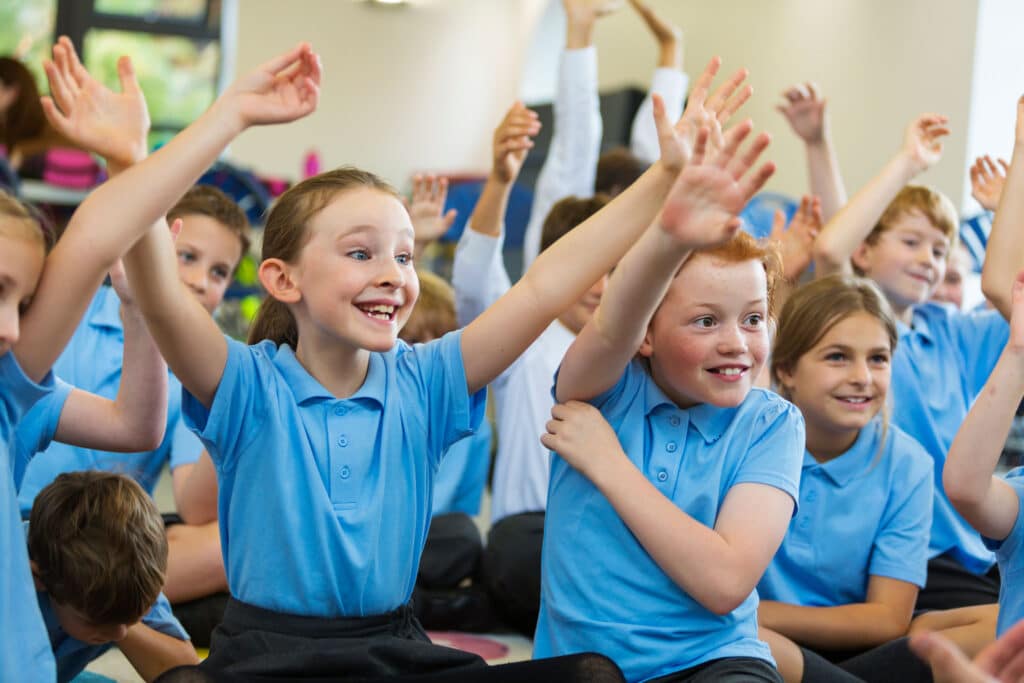
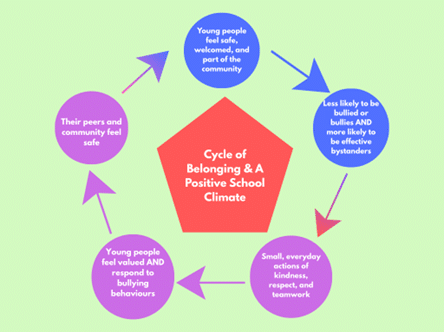
Research shows that school climate (how children feel about school) makes a big difference in bullying prevalence. When students feel safe, welcomed, and part of the class community, they are less likely to bully others or be bullied themselves. Even better, outputs from the Anti-Bullying Centre in DCU tell us that these small, positive acts help children build their confidence as bystanders and community members, which means they can:
- Recognise
- Respond to
- Report bullying behaviours
For some, this may seem like common sense. But how can we ensure we are building this positive school climate as members of the school community?
Through small, positive acts of kindness, respect and teamwork.
The way we set the tone in our spaces, the way we model respect, and the way we encourage young people to include one another, all help shape the climate. A positive climate is not just about reducing bullying, it is about helping every child feel they belong. In school, we know that the classroom isn’t the only place students go during school hours – that’s why it’s important to build an inclusive school community in libraries, yards, and canteens as well.
Some small acts that help at school:
- Greeting students warmly and by name
- Stepping in quickly and calmly if we see unkind behaviour
- Ensuring we let students share and make class decisions, while noticing and including isolated and quieter students
- Co-creating clear and predictable routines with students
- Noticing and encouraging positive behaviours (kindness, teamwork, respect)
- Providing space to regulate emotions (calm areas, reflection time)
Studies in Ireland tell us that demonstrations of belonging and inclusion are essential to building this positive climate. In fact, students at a DCU event in November 2025 have highlighted that an intolerance of difference is often linked to bullying, and highlighted the importance of valuing difference as a prevention strategy.